7th October 2026 — Microscan Infocommtech Private Limited (“Microscan”), A leading infrastructure provider and one of India’s leading carriers providing services in Telecom, Cybersecurity, Subsea and pioneer in building India’s first carrier neutral Open Cable landing, and Activeport Group Ltd (ASX: ATV), a global provider of software-defined network orchestration technology, today announced the appointment of Activeport to build and launch India’s newest Network-as-a-Service (NaaS) platform across Microscan’s India fibre network to connect all its DCs and Enterprise customers.
The new platform will leverage Activeport’s multi-vendor orchestration software, layered on Microscan’s owned fibre infrastructure. The network connects every major data centre and cable landing station in Mumbai and major data centers in global geographies connecting to global financial exchanges, as well as thousands of enterprise buildings across multiple geographies. It supports connectivity for enterprise, carrier, financial services, media and government customers globally.
The partnership will give Microscan’s customers a self-service portal to provision, scale, and manage high-availability network services on demand, replacing traditional manual and appointment-based provisioning with automated, real-time delivery.
Microscan will launch the new platform for customers looking to enhance their on-demand digital journey for connectivity between data centres, enterprise buildings and direct on-demand connectivity to major cloud providers across India.

Activeport’s orchestration platform automates the design, deployment, and management of network services from the edge to the cloud. Deployed as an overlay on Microscan’s network, the platform will enable Microscan to offer more flexible products, on-demand bandwidth and instant provisioning.
These capabilities will extend across data centres, thousands of enterprise buildings and cloud on-ramps. Customers will also have access to point-to-point and point-to-multipoint circuits, managed network services, rapid activation and centralised, real-time visibility.
The partnership adds to Microscan’s expanding portfolio of digital infrastructure services, which already includes self-service product overlay software to carriers and data centres to launch their own NaaS platforms across their own infrastructure.
Together, the two companies are also opening an exciting new frontier in on-demand connectivity for India: an AI-led marketplace in which Microscan can buy and sell connectivity, GPU, cloud, and other services via API with other network providers using Activeport’s software.
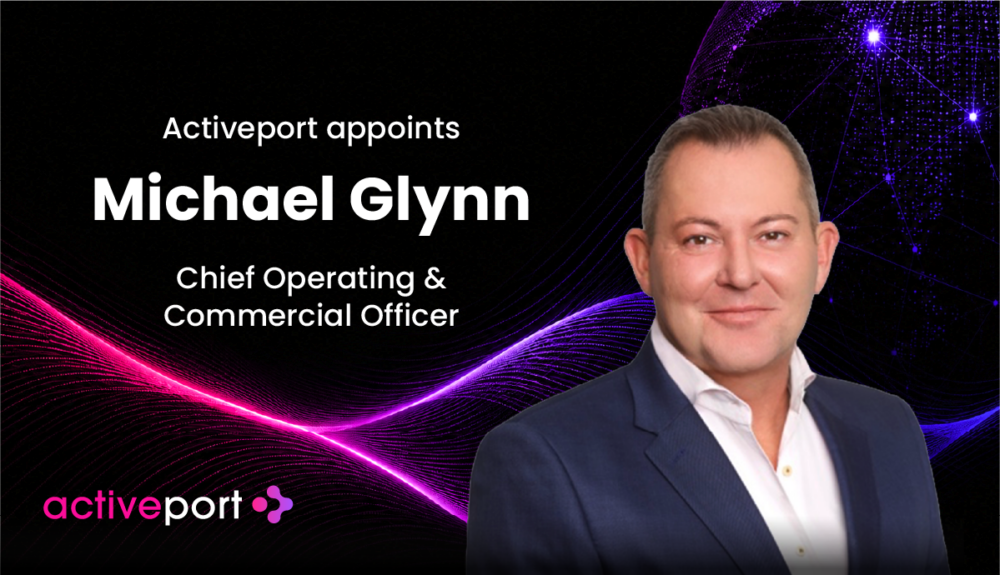
Activeport’s Michael Glynn said: “AI is driving explosive growth across India’s data centre and network markets, and the winners will be the operators whose infrastructure can be provisioned in real time. Together with Microscan, one of India’s largest independent network owners, we’re proud to bring that capability to market and create an exciting new NaaS service for customers across India.”
Microscan’s Avinash Rawal said: “This platform transforms how our customers consume connectivity, moving from manual, appointment-based provisioning to instant, self-service delivery on demand. Partnering with Activeport lets us bring a genuinely new class of NaaS service to enterprises, carriers, and cloud users right across India.”
The NaaS platform is expected to launch in beginning of 2027, with a phased national rollout across Microscan’s fibre footprint.
https://www.activeport.com.au/
Activeport Group Ltd (ASX: ATV) is an Australian technology company that delivers network automation and orchestration software to telecommunications, data centre, and IT markets worldwide. Headquartered in Perth, with operations across Australia, Europe, and India, Activeport’s software platform powers self-service, edge-to-cloud Network-as-a-Service solutions for carriers and enterprises globally.
Microscan Infocommtech Private Limited is an ISO-certified (ISO 27001, ISO 9001:2015, ISO 20000-1) telecommunications service provider headquartered in Mumbai, India, with more than 25 years of experience delivering fibre connectivity, ultra-low-latency, and managed network solutions to enterprise, carrier, BFSI, media, and government customers across India.
For most network providers, buying an orchestration overlay such as Activeport and building differentiation on top of it beats building the whole platform from scratch. Building only makes sense when orchestration itself is your product, and you have the engineering depth and patience to fund it for years.
Every provider is being pushed the same way. Customers expect to order a port either at a data centre, enterprise building or mobile device… spin up a cloud/Compute/AI/L1-4 connection or change bandwidth from a portal in minutes, not wait weeks for a ticket to work its way through provisioning. That expectation, usually called Network-as-a-Service (NaaS), needs a software layer that sits above your routers, switches, AI/Compute platforms and partner interconnects and turns them into products. The question is whether you write that layer yourself or license a fully white-label, on-premises platform.

Activeport NaaS Portal: Services, Orders and Alerts in One View
What the platform actually has to do
An orchestration overlay is much more than a provisioning script. Before comparing build and buy, it helps to list what a production-grade platform must handle:
Each item is a product in its own right. That list is the real scope of a “build” decision.
Building is attractive for real reasons, and some of the world’s largest operators have done it successfully.
Total control. Your roadmap answers to your customers and nobody else. You never wait on a vendor’s release cycle or argue over feature priority.
Exact fit. Homegrown software can model your network, your products and your back-office processes precisely, including the odd legacy systems every provider carries.
Differentiation. If your competitive edge is a unique customer experience or a service no one else offers, owning the code that delivers it can be a strategic asset.
No licence fees. There is no per-port, per-endpoint or per-site charge growing with your success.
Capability in-house. You build a software engineering team that understands both networking and code, which is rare and valuable.
The build case usually looks cheaper on a whiteboard than it turns out in practice.
Time to market. A credible first release, with a portal, a handful of vendor integrations and one or two cloud on-ramps, typically takes 12 to 24 months of focused work. Competitors that bought a platform are selling on-demand services during that time.
The team you need. You need network automation engineers, backend and frontend developers, UX, QA, DevOps and security people, plus product management. These skills are expensive and hard to retain, and a small team is fragile when key people leave.
Maintenance never ends. Every new router model, firmware release and cloud API change creates work. Over the life of a platform, upkeep usually costs more than the initial build.
Opportunity cost. Every engineer writing orchestration plumbing is not working on what customers actually choose you for: coverage, performance, service and price.
Delivery risk. Large internal software projects in telecom have a long history of running late and over budget, and an unfinished platform delivers no revenue at all.
Activeport is an Australian, ASX-listed (ATV) software company whose core product is exactly this overlay layer. Its on-prem software as a white-label, carrier-grade orchestration platform that lets network providers and data centres launch their own NaaS offering on top of existing infrastructure.
A ready-made product catalogue. Out of the box, the platform targets the services providers most want to sell on demand: access ports, Layer 1/2/3 data-centre interconnect, ports to cloud, multi-cloud, GPU orchestration, port-to-NNI partner services and IP transit on-demand features.
Multi-vendor by design. At its centre is a Management and Orchestration (MANO) platform that sits above the network and integrates with devices and systems through APIs, regardless of vendor. Its orchestration spans compute, core, data centre and enterprise edge.
Your brand, not theirs. Because the portal is white-label, customers see your product. Activeport also offers multi-tenant SDWAN + Product feature that runs on any x86 device and NFV to virtualise switches, routers and firewalls.
Built for telcos. The Telecom offering focuses on a single-screen view of the network, automated provisioning, and carrier APIs combined with orchestration for customer self-service.
Speed and predictability. The biggest benefit is time. Instead of a multi-year build, you integrate, configure and launch, turning a large uncertain capital project into a known operating cost. The vendor carries the burden of keeping up with device and cloud API changes across its whole customer base.

Activeport NaaS Portal – Order on the map view
Buying is not risk-free, and an honest evaluation should weigh these points.
Vendor dependence. Your service layer depends on a supplier’s roadmap, support quality and financial health. For a smaller listed vendor, review its balance sheet, customer base and escrow or source-code arrangements before signing.
Fit gaps. No platform matches every provider’s products and processes exactly. Expect some workflows to change and some custom integration work, especially toward billing and legacy OSS.
Licence economics at scale. Licence costs grow with ports, endpoints or sites. Model the cost at your three-to-five-year target scale, not just at launch.
Less differentiation in the plumbing. Competitors could license the same engine. Your edge then has to come from your network footprint, pricing, partnerships and service.
Device coverage. Confirm that the specific vendors, models and firmware versions in your network are supported today, not just on the roadmap.
Score your situation against these factors. If most of your answers fall in the “Buy” column, licensing a platform like Activeport is the safer path.
| Factor | Lean towards build | Lean towards buy |
|---|---|---|
| Time to market | You can wait 18+ months | You need on-demand services this year |
| Engineering team | 15+ experienced software and automation engineers | A small team, mostly network operations |
| Strategic role | Orchestration is your core differentiator | Orchestration is an enabler for selling connectivity + compute |
| Network mix | Unusual or proprietary gear no vendor supports | Mainstream multi-vendor equipment |
| Budget model | Comfortable with large, uncertain capex | Prefer predictable OPEX tied to revenue |
| Scale | Very large, where licence fees dwarf build cost | Small to mid-sized, growing |
Before deciding, ask any vendor, Activeport included, these questions:
A middle path is common: buy the core orchestration engine, then build your own customer experience, analytics or niche integrations on its APIs.
Build if orchestration is your product, you have a deep software bench, and you can afford to wait. Buy if you are a network provider whose real goal is to sell on-demand connectivity faster and with fewer people.
For most regional carriers, data-centre operators and wholesale providers, the second description fits. A white-label, multi-vendor platform like Activeport gets NaaS products to market in months rather than years, and lets your engineers focus on the network customers actually pay for. Run a proof of concept on your own gear, model the licence costs at scale, and let the evidence settle it.
Considering how to bring on-demand services to your network? Talk to Activeport about your infrastructure, integration requirements and launch plans, and see the orchestration platform in action.